Religion vs. Relationship

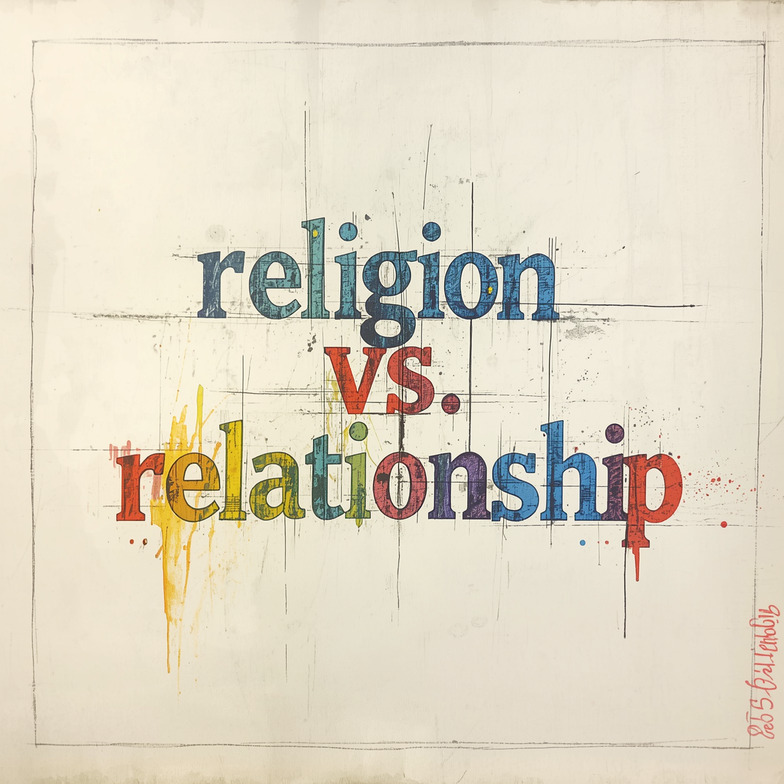
I am a Christian, and I am religious. That statement should not be scandalous, yet in many modern evangelical churches in the United States, it can sound almost heretical. It is common to hear, “I don’t believe in religion; I believe in relationship,” or “Christianity is not a religion; it is a relationship.” Such statements assume a fundamental divide between religion and relationship. But is that assumption correct?
I would argue that this assumption is not only incorrect but also dangerous and biblically inaccurate. Religion is commonly defined as an organized system of attitudes, beliefs, and practices. By that definition, any member of the Southern Baptist Convention, of which I am one, is religious. The SBC is an organized fellowship of likeminded churches with shared attitudes, common beliefs expressed in the Baptist Faith and Message 2000, and shared practices such as the Lord’s Supper and believer’s baptism. In that sense, Southern Baptists are religious.
This reveals a flawed understanding of true religion that is common in modern evangelical churches. Many people equate being “religious” with being stodgy, rule-keeping, joyless, and more interested in checking boxes on a holy to-do list than rejoicing in the Lord. But that is a caricature of religion, and it is deeply unbiblical.
After all, God has been giving humanity rules from the beginning, and He gave those rules so we could enjoy life in relationship with Him. Genesis 2:15–17 shows God giving Adam both positive and negative commands. Only after Adam disobeyed God’s command not to eat from the Tree of the Knowledge of Good and Evil was the relationship between God and humanity fractured. Illustrating that God’s commands were designed to preserve joyful fellowship with Him.
Later, during the Exodus, one of the first things God did for Israel was give them the Ten Commandments (Exodus 20:1–17). These commands governed Israel’s relationships both vertically with God and horizontally with others. Scripture never presents them as onerous or sterile. Instead, God’s commands are described as delightful, life-giving, desirable, trustworthy, righteous, and protective (Psalm 19:7–11).
King David gives a clear example of how God’s law leads to praise and worship. Psalm 119 is devoted to praising God’s law, and 2 Samuel records David dancing before the Lord when the ark was brought to Jerusalem (2 Samuel 6:14), while all Israel celebrated with him (v. 15). God’s covenant people did not see the law as a negative list of “thou shalt” and “thou shalt not.” They saw it as a reason to rejoice.
The New Testament maintains this positive view of God’s law. Jesus taught that the Law had not been abolished (Matthew 5:17–20). The New Testament authors also never disparage God’s law. Paul, often falsely accused of opposing the Law, explicitly taught that the Law is good (Romans 7:12; 1 Timothy 1:8). Biblically speaking, obeying God’s commands is not opposed to relationship with Him. God gave His commands so His people could enjoy life with Him.
Dividing religion from relationship is not only unbiblical; it is also dangerous. Christianity, as a religion with shared attitudes, beliefs, and practices, helps protect the faith. Its collective beliefs and practices guard the church from heresy. Without sound doctrine, believers lose the guardrails that guide them in their relationship with God and protect them from false teaching.
True religion provides this protection by helping the church recognize wolves among the sheep. When Christianity is reduced to “only a relationship,” anything can go. Scripture becomes less important, and personal feelings and desires can become more authoritative than God’s commands.
To be sure, some people make a mockery of true religion. They turn Christianity into mere rule-following and reduce life with God to a checklist devoid of the joy of knowing Him. Paul faced this problem with the Judaizers throughout much of his ministry. Even so, separating religion from relationship is a dangerous overreaction. What we need instead is a return to true religion.
True religion is grounded in God’s sovereign election of His covenant people. Exodus 20:2, the preamble to the Ten Commandments, helps clarify this point: “I am the LORD your God, who brought you out of the land of Egypt, out of the house of slavery.” Notice what God did not say. He did not tell Israel to obey the Ten Commandments so that He would become their God. That would make Israel’s obedience the cause of God’s choosing.
Instead, God declared that Israel already belonged to Him: “I am the LORD your God.” He had chosen and redeemed Israel before giving them the Law. Exodus 20:2 therefore shows not a cause-and-effect relationship, but an inferential one: because God had chosen and redeemed Israel, they were to obey.
This same pattern holds true today. God’s sovereign work of redeeming people from slavery and bringing them into relationship with Himself did not end with Israel. Ephesians 1:4 teaches that God chose His people before the foundation of the world to be holy and blameless before Him. His choosing was not based on anything they had done or would do, but solely on His gracious will.
Those whom God chose were redeemed through the death, burial, and resurrection of Jesus Christ and freed from the bondage of sin and death. Because they have been redeemed and now live under God’s grace, they joyfully walk in obedience to His commands (Romans 6).
In conclusion, God sovereignly chose to redeem His people from sin and its consequences. By redeeming them, He brought them into relationship with Himself. Therefore, they are called to joyfully obey His commands and live righteous lives. True religion is grounded in God’s redemption of His people and can be summarized this way: “I am redeemed; therefore, I obey.” So let us stop making an unbiblical and dangerous distinction between religion and relationship. Instead, let us joyfully embrace true religion, grounded in God’s redemptive love for His chosen people.